
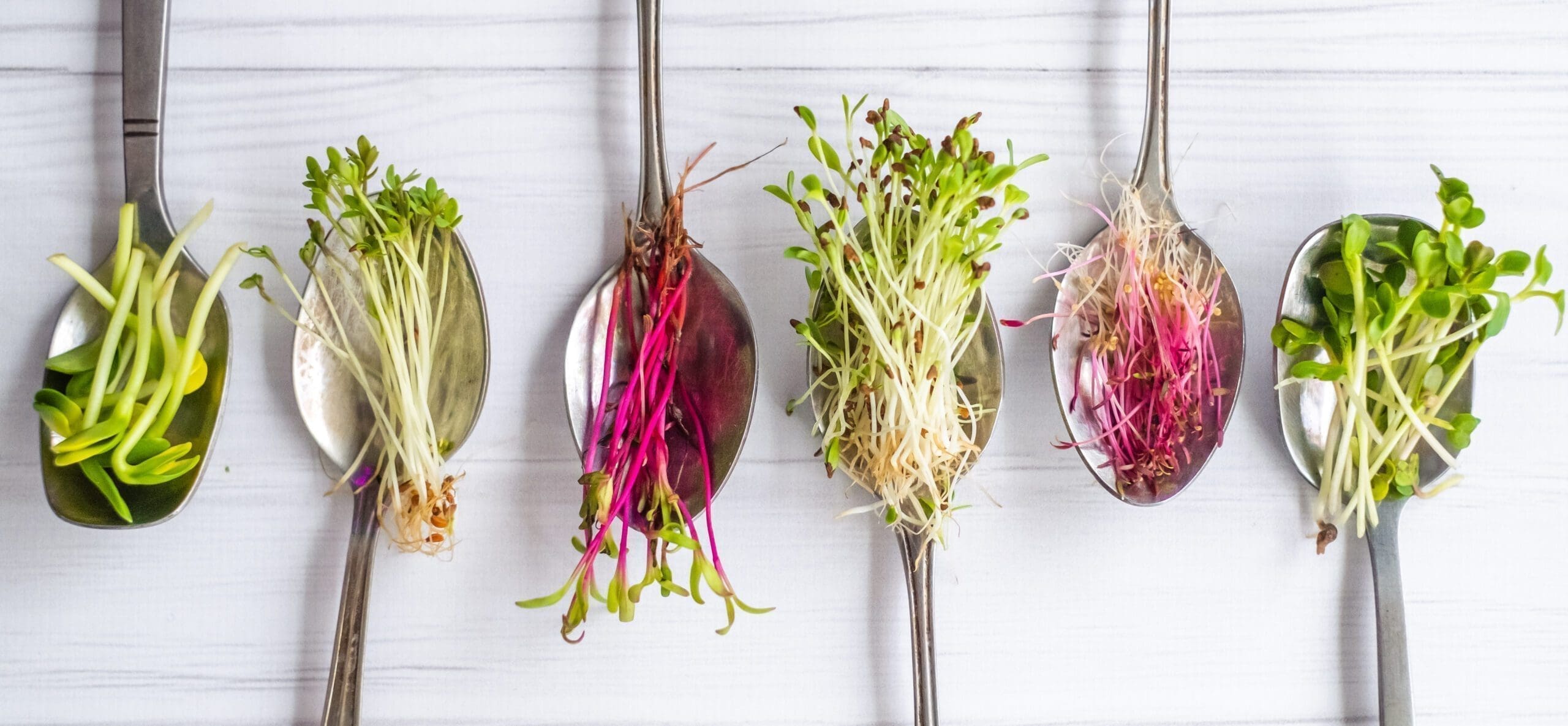
Microgreens are one of the simplest and most rewarding crops you can grow at home. Packed with nutrients, colour, and flavour, they’re ideal for small-space gardening, urban living, or simply adding something fresh and vibrant to your diet. Even if you’ve never grown anything before, microgreens are a great place to start. In this blog post, we’ll explore the top four microgreens you should consider growing: Broccoli, Sunflower, Radish, and Peas. These varieties are popular for good reason — they’re fast-growing, beginner-friendly, and incredibly versatile in the kitchen. Whether you’re aiming for better nutrition, improved food self-sufficiency, or simply a satisfying garden project, these four are must-haves.
1. Broccoli Microgreens
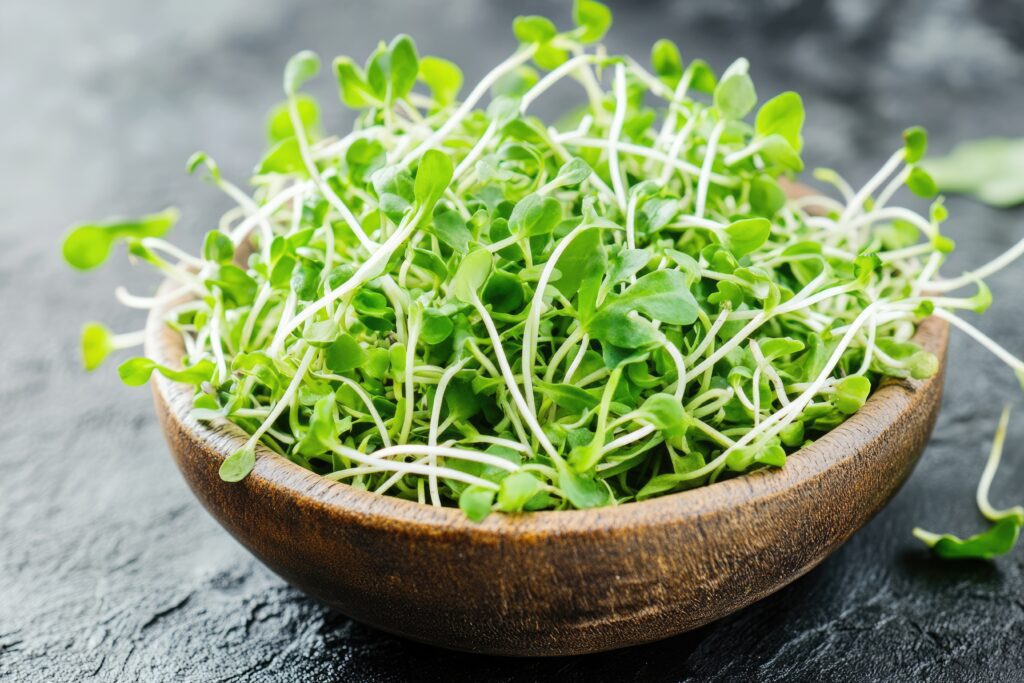
Botanical Name: Brassica oleracea
- Mild flavour with a gentle peppery note, suitable for most dishes
- High in sulforaphane, a compound linked to detoxification and cellular health
- Ready to harvest in 7–10 days, making them one of the quickest greens to grow
Broccoli microgreens are often considered the go-to choice for health-focused growers. While they look delicate, they’re nutritional powerhouses. A small handful provides a rich source of vitamins A, C, and K, as well as important antioxidants. They’re ideal in sandwiches, wraps, or as a garnish on soups and grain bowls.
How to Grow: No pre-soaking is required. Sow seeds evenly over a moist medium like coconut coir or seed-raising mix. Cover lightly and place in darkness (blackout) for 2–3 days. Once sprouted, move to indirect light or under grow lights for best colour. Keep moist using a mist spray bottle or bottom watering.
Common Issues: Avoid overwatering to reduce risk of damping off or mould. Ensure good airflow and use a sterile tray to prevent fungal growth.
2. Sunflower Microgreens
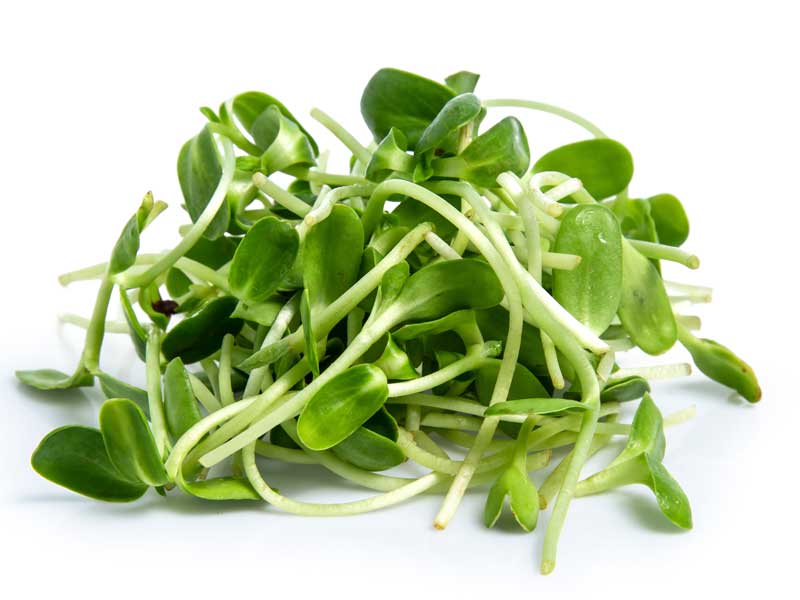
Botanical Name: Helianthus annuus
- Crisp, juicy texture with a mild nutty flavour
- Higher protein content than most other microgreens
- Typically harvested at 8–12 days for best texture
Sunflower microgreens are a favourite among chefs for their satisfying crunch and striking appearance. They’re thicker and more substantial than most microgreens, making them great for adding body to dishes. Nutritionally, they’re loaded with B vitamins, vitamin E, and trace minerals like selenium and magnesium.
How to Grow: Soak seeds in cool water for 8–12 hours before sowing. Drain and rinse thoroughly. Sow thickly onto a growing medium and press gently into the surface. Cover with a second tray to apply light pressure for even germination. Keep in blackout for 2–3 days, then uncover and expose to bright light. Water regularly but avoid soggy soil.
Common Issues: Sunflowers grow best with airflow and moderate humidity. Watch for seed hulls clinging to cotyledons—gently mist or brush them off after sprouting.
3. Radish Microgreens
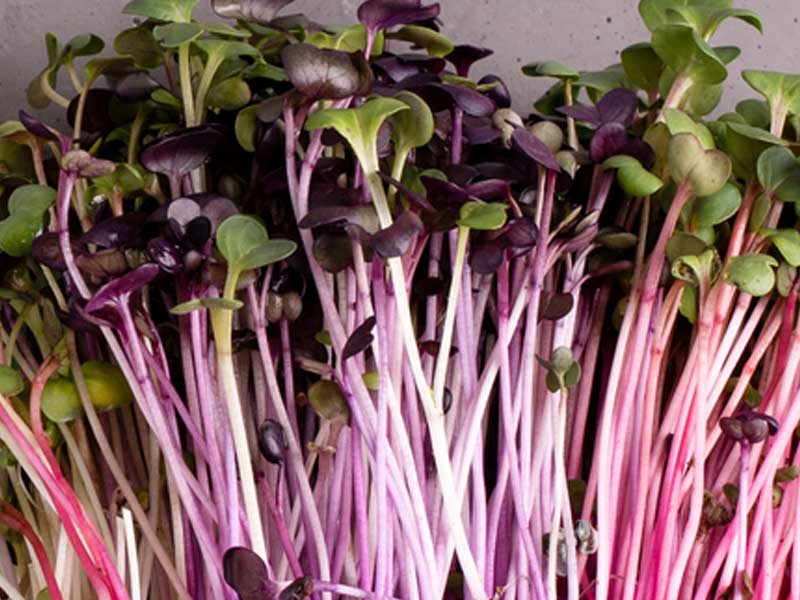
Botanical Name: Raphanus sativus
- Strong, spicy flavour similar to mature radish root
- Fastest-growing microgreen, often harvestable in 5–7 days
- Available in colourful varieties like Red Rambo, China Rose, and Triton
Radish microgreens are bold in flavour and colour. They bring a welcome zing to salads, tacos, sandwiches, and rice bowls. The reddish stems and green to purple cotyledons are as visually striking as they are tasty. Their rapid growth makes them ideal for impatient beginners or anyone wanting quick kitchen results.
How to Grow: No pre-soaking needed. Spread evenly on moist soil or matting and press gently. Keep in a dark place for 2 days, then bring into light. Mist daily or use bottom watering. Avoid overcrowding as radish roots grow vigorously.
Common Issues: Radish grows vigorously and can sometimes become leggy without enough light. Ensure they receive at least 12 hours of strong light per day after blackout.
4. Pea Microgreens
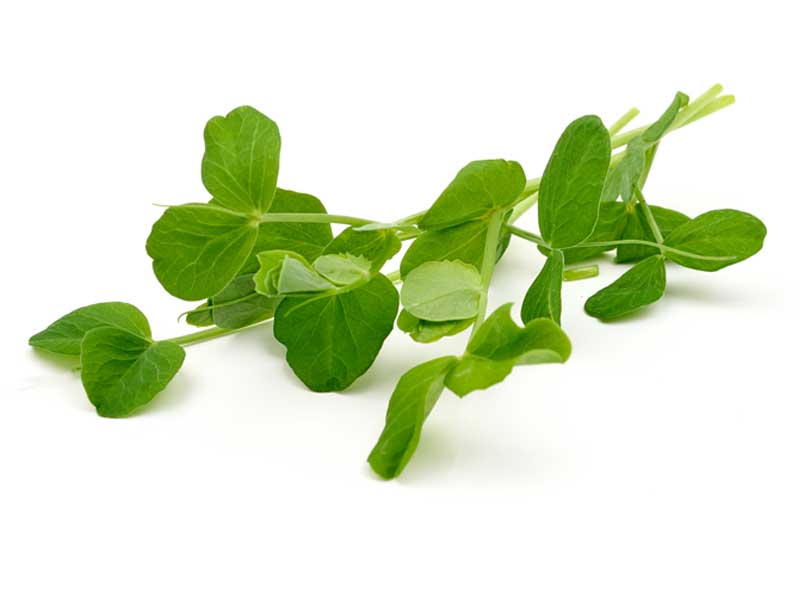
Botanical Name: Pisum sativum
- Fresh, sweet pea flavour that pairs well with savoury or fresh dishes
- Thick stems and tendrils add texture and crunch
- Longer growing time of 10–14 days, but very rewarding
Pea microgreens, also called pea shoots, are a classic microgreen that can be grown year-round. Their flavour is similar to snow peas and they can be added raw to stir-fries, tossed in salads, or used as a fresh topping for soups and bowls. They’re high in fibre, iron, and vitamins A and C.
How to Grow: Soak peas in water for 6–8 hours before planting. Spread evenly on your chosen medium and press down. Cover with a tray or dome and keep dark for 2–3 days. Once shoots begin to stretch, uncover and expose to bright light. They prefer cooler temperatures and good airflow.
Common Issues: Because of their longer growth period, peas are more prone to mould if ventilation is poor. Use shallow trays and avoid overwatering.
Microgreens Growing Table
| Microgreen | Soak Time | Blackout Period | Days to Harvest | Flavour | Difficulty |
|---|---|---|---|---|---|
| Broccoli | None | 2–3 days | 7–10 days | Mild, slightly peppery | Easy |
| Sunflower | 8–12 hours | 2–3 days | 8–12 days | Nutty, crunchy | Moderate |
| Radish | None | 2 days | 5–7 days | Spicy, sharp | Very easy |
| Peas | 6–8 hours | 2–3 days | 10–14 days | Sweet, fresh | Easy |
Harvesting and Storage Tips
- Harvest with clean scissors or a sharp knife just above the soil line.
- Rinse microgreens gently and dry using a salad spinner or absorbent towel.
- Store in a sealed container in the fridge for up to 5 days.
- Only harvest what you need to maximise freshness.
If you plan to sell or share your microgreens, handle them carefully to avoid bruising and package them in breathable containers to reduce moisture build-up.
Health Benefits of Microgreens
Microgreens are far more than just pretty garnishes. Studies have shown that microgreens can contain 4 to 40 times more nutrients than their mature counterparts. They are especially rich in:
- Antioxidants and polyphenols (great for inflammation and heart health)
- Vitamins A, C, E, and K
- Essential amino acids
- Enzymes that support digestion and immunity
Including a daily handful of microgreens in your meals is a simple way to boost nutrient density without adding bulk or calories.
Start Growing Today
Whether you’re using soil trays, grow mats, or hydroponic systems, these four microgreens—broccoli, sunflower, radish, and peas—are perfect to get started with. They’re flavourful, fast, and forgiving. And best of all, they can be grown indoors year-round with minimal equipment.
If you’re new to growing, start small with one tray per variety. Experiment with lighting, sowing density, and watering to find what works best for you. Once you’re comfortable, you can scale up to multiple trays or even start sharing your harvest with friends and family.
Ready to begin? Explore high-quality seed options and beginner kits at Seedmart Australia and turn your windowsill into a micro-farm.
📥 Download the Free Microgreens Growing Guide
Want a printable version of this guide? Download our free PDF growing chart, including sowing tips, harvesting timelines, and the best varieties to grow in Australian conditions.
Happy growing!