
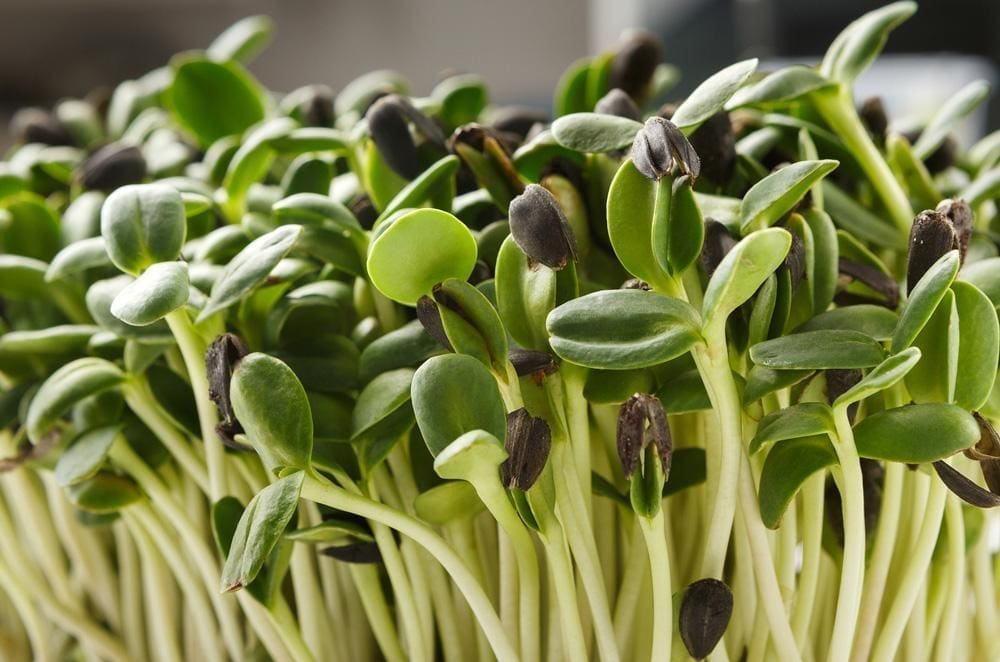
Sunflower microgreens are one of the most satisfying microgreens to grow at home. They produce thick, crisp stems, broad green leaves and a mild, nutty flavour that works well in salads, sandwiches, wraps and fresh garnishes.Compared with smaller-seeded microgreens such as broccoli or mustard, sunflower microgreens require a little more preparation. The seeds are normally soaked and pre-sprouted before planting, and good airflow and moisture control are important for reliable results.In this guide, you’ll learn how to grow sunflower microgreens using soil or coir, including how long to soak sunflower seeds, how much seed to use per tray, when to uncover your crop, how to prevent mould and when to harvest.
Sunflower Microgreens at a Glance
What You Need to Grow Sunflower Microgreens
- Black sunflower seeds suitable for growing microgreens.
- A shallow growing tray, approximately 30 × 35 cm.
- A second tray or lid for covering and weighting the seeds during germination.
- A clean jar, sprouting tray or breathable bag for pre-sprouting.
- Quality potting mix or coir.
- A spray mister or watering bottle.
- Clean scissors or a microgreen harvesting knife.
- Optional: a fan to improve airflow in enclosed growing areas.
For a tray measuring approximately 30 × 35 cm, start with around 200–250 grams of sunflower seed. You can adjust the amount over subsequent crops according to your preferred density and growing conditions.
Choosing Sunflower Seeds for Microgreens
Choose clean, viable sunflower seed intended for growing rather than roasted or processed sunflower seed sold for eating.
Black sunflower varieties are particularly popular for microgreen production because they produce substantial seedlings with thick stems and broad green seed leaves.
Seedmart supplies Australian Grown Black Sunflower Microgreen Seeds in retail and bulk quantities for home and commercial growers.
How to Grow Sunflower Microgreens Step by Step
1. Soak the Sunflower Seeds for 8–12 Hours
Place the sunflower seeds into a clean jar or container and cover generously with cool, clean water.
Soak the seeds for approximately 8–12 hours. Sunflower seeds may float, particularly when first placed in water, so a clean plate or suitable weight can be used to help keep them submerged.
Do not leave the seeds soaking indefinitely. Once the soaking period is complete, drain them thoroughly.
2. Pre-Sprout the Seeds for 12–24 Hours
After soaking, allow the sunflower seeds to pre-sprout for approximately 12–24 hours.
You can use a clean sprouting jar, tray or breathable bag. Keep the seeds damp and well drained rather than wet or submerged.
Small roots will begin to emerge as germination starts. Pre-sprouting helps establish the seed before it is planted into the microgreen tray.
3. Prepare the Growing Tray
Add approximately 2–3 cm of moist potting mix or coir to the base of your growing tray.
Level the surface gently without compacting it excessively. The growing medium should be evenly moist but should not contain standing water.
Sunflower seedlings become relatively large compared with many other microgreens, so a medium that provides good moisture retention and root support is useful.
4. Sow the Sunflower Seeds Evenly
Spread the soaked and pre-sprouted sunflower seeds evenly over the surface of the tray.
Aim for good coverage without creating thick piles of overlapping seed. Excessive crowding can reduce airflow around the developing seedlings and increase the likelihood of deterioration.
Press the seeds gently into contact with the growing medium and mist lightly if required.
5. Cover and Weight the Tray
Place another tray or suitable lid over the seeds during the initial germination period.
A small amount of even weight can help keep the seed in contact with the growing medium while encouraging sturdy stems and root establishment.
Keep the covered tray in a suitable indoor growing area with good ventilation and away from hot, direct sunlight.
6. Keep the Growing Medium Moist
Check the tray regularly while the sunflower seeds are germinating.
The growing medium should remain moist, but avoid repeatedly saturating it. Excess water, poor drainage and limited airflow can all contribute to problems in dense sunflower crops.
Water according to the condition of the tray rather than following a rigid schedule. Warmer conditions and strong airflow may require more frequent watering than cool or humid conditions.
7. Uncover the Sunflower Microgreens
Once the seedlings are well established and begin pushing strongly against the covering tray, remove the cover.
This generally occurs several days after sowing, although timing varies according to temperature, seed condition and growing environment.
Move the tray into suitable natural light or beneath a grow light so the seed leaves can develop their characteristic green colour.
8. Grow the Seedlings in Good Light and Airflow
Continue watering as required while the microgreens develop.
Good airflow is particularly useful for sunflower microgreens because the seedlings are substantial and can form a relatively dense canopy.
If you are growing indoors in an enclosed space, a small fan can help improve air movement around the trays. Avoid directing an excessively strong airflow directly onto young seedlings.
When to Harvest Sunflower Microgreens
Sunflower microgreens are commonly ready to harvest around 7–14 days after sowing.
Many growers harvest when the seedlings are approximately 8–12 cm tall and the two broad seed leaves have opened.
Harvest before the crop becomes overly mature or develops a tougher texture. Using clean scissors or a suitable harvesting knife, cut the stems just above the growing medium.
Avoid cutting soil or coir into your harvested crop.
What Do Sunflower Microgreens Taste Like?
Sunflower microgreens have a mild, slightly nutty flavour and thick, crisp stems. They are substantially larger and crunchier than delicate microgreens such as broccoli or kale.
They can be used in:
- Salads
- Sandwiches and wraps
- Fresh vegetable bowls
- Garnishes
- Smoothies
- Mixed microgreen salads
Their mild flavour also makes sunflower shoots easy to combine with stronger microgreens such as radish, mustard or rocket.
How Much Sunflower Seed Do I Need Per Tray?
For a tray measuring approximately 30 × 35 cm, start with around 200–250 grams of sunflower microgreen seed.
- 200 g per tray: approximately 25 trays from 5 kg of seed.
- 250 g per tray: approximately 20 trays from 5 kg of seed.
- 5 kg bag: approximately 20–25 trays depending on sowing density.
Commercial growers should experiment with seed density to determine the rate that produces the best combination of yield, airflow and crop quality in their particular growing system.
Troubleshooting Sunflower Microgreens
Why Are My Sunflower Seeds Slimy or Smelling Bad?
Slimy seed or an unpleasant smell generally indicates that the seed has remained too wet or that microbial deterioration has developed.
Possible causes include:
- Overcrowding during soaking or pre-sprouting.
- Insufficient drainage.
- Poor airflow.
- Excessive heat.
- Leaving the seeds soaking for too long.
- Unclean jars, trays or equipment.
Drain sunflower seed thoroughly after soaking and ensure that pre-sprouting seed remains damp rather than submerged or waterlogged.
Why Do My Sunflower Microgreens Have Mould?
Sunflower microgreens can be more susceptible to mould problems than some smaller microgreen varieties because the seeds are large, the hulls retain moisture and mature trays can become quite dense.
Common causes include:
- Unclean equipment: Wash and dry trays, sprouters and tools thoroughly between crops.
- Excessive seed density: Avoid creating thick areas where seed piles on top of seed.
- Poor airflow: Provide ventilation around growing trays.
- Excess moisture: Keep the medium moist without keeping it continuously saturated.
- Poor drainage: Ensure excess water can leave the growing tray.
Are the White Hairs on Sunflower Roots Mould?
Fine white root hairs can sometimes be mistaken for mould, particularly around newly germinated seedlings.
Root hairs usually appear evenly around the roots and may become less obvious immediately after watering. Mould is more likely to appear irregularly across seed hulls, the growing medium or damaged plant material and may continue to spread.
If you are uncertain, inspect the tray carefully and pay attention to smell, plant condition, airflow and moisture levels.
Why Are Sunflower Seed Hulls Stuck to the Leaves?
It is normal for some sunflower hulls to remain attached to the seed leaves as the seedlings emerge.
Keeping the seedlings adequately moist during germination can help the hulls soften. Many loosen naturally as the leaves open and can be gently removed before harvest if required.
Ideal Growing Conditions for Sunflower Microgreens
Sunflower microgreens generally germinate well at temperatures around 20–25°C.
They can grow more slowly during cool weather. During warmer and more humid conditions, growers should pay particularly close attention to airflow and moisture management.
After germination, provide good light and ventilation. Natural light can work well provided the trays are not exposed to excessive heat or harsh direct sunlight.
Frequently Asked Questions
Do sunflower microgreen seeds need to be soaked?
Yes. Sunflower microgreen seeds are generally soaked for approximately 8–12 hours before they are pre-sprouted and planted.
How long should sunflower seeds be pre-sprouted?
Approximately 12–24 hours after soaking is a useful starting point. Small roots should begin emerging as germination starts.
How long do sunflower microgreens take to grow?
Sunflower microgreens are commonly ready for harvest approximately 7–14 days after sowing, depending on temperature, light, moisture and growing conditions.
How much sunflower seed should I use per tray?
For a tray measuring approximately 30 × 35 cm, around 200–250 grams of seed provides a practical starting rate.
Can sunflower microgreens be grown in coir?
Yes. Coir can provide suitable moisture retention and root support for sunflower microgreens. Quality potting mix is another commonly used option.
Can sunflower microgreens be grown hydroponically?
Sunflower microgreens can be grown using different systems, but soil or coir is often easier because the relatively large seedlings benefit from good root support and consistent moisture.
When should I uncover sunflower microgreens?
Remove the cover once the seedlings are well established and pushing strongly upward. They can then be moved into suitable growing light.
What do sunflower microgreens taste like?
Sunflower microgreens have a mild, nutty flavour with crisp stems and broad green seed leaves.
Where can I buy sunflower microgreen seeds in Australia?
Seedmart supplies Australian Grown Black Sunflower Microgreen Seeds in retail and bulk quantities for home growers and commercial microgreen production throughout Australia.
Start Growing Sunflower Microgreens
Sunflower microgreens take a little more preparation than many smaller microgreens, but once the soaking, pre-sprouting and moisture-management process is understood, they are a productive and rewarding crop.
Ready to grow your own? Shop our Australian Grown Black Sunflower Microgreen Seeds or explore the Seedmart microgreen seed range.